Co-creating the Beyond Borders Theory of Change
Mapping Change, Measuring Impact
4/1/20261 min read
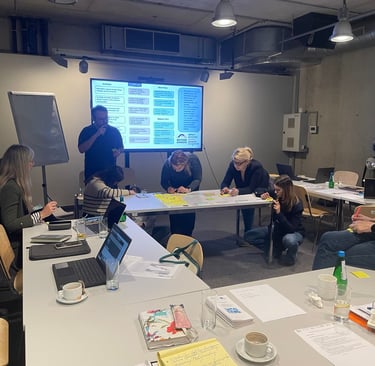
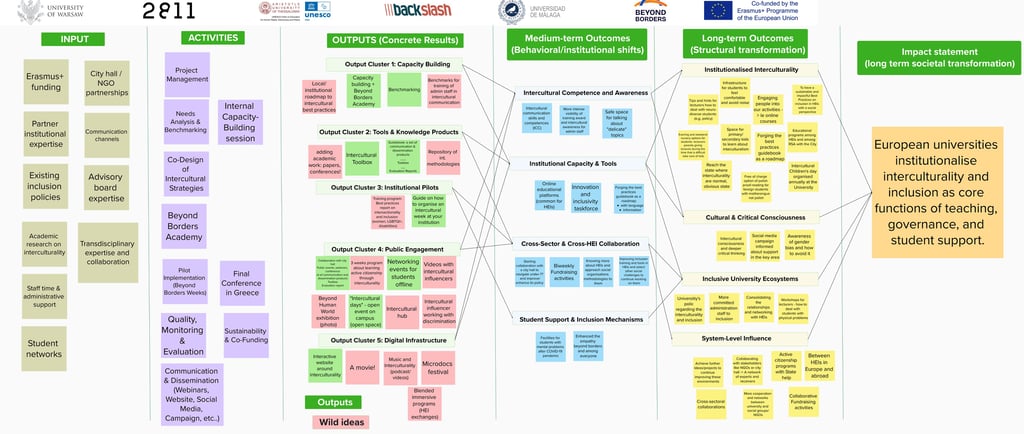
As part of WP4, the Beyond Borders consortium worked together to develop the project’s Theory of Change: a shared roadmap that explains how the project’s activities are expected to lead to concrete results, institutional change, and long-term impact.
A Theory of Change is useful because it helps partners move beyond individual activities and see the bigger picture. It clarifies what the project aims to change, how this change is expected to happen, and which steps are needed to move from planning to impact.
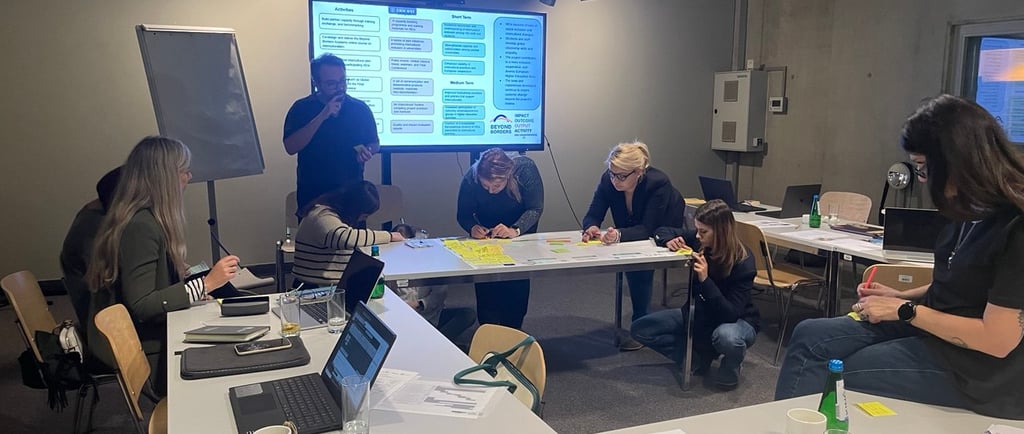
The process took place in two stages. The first session was held in person during the Transnational Project Meeting in Warsaw, where partners began mapping the project logic from inputs and activities to outputs, outcomes, and impact. This initial workshop created space for collective reflection, creative thinking, and a shared understanding of the project’s purpose.
A second online session allowed partners to refine the first draft, cluster ideas more clearly, and connect the different elements of the Theory of Change. Together, the consortium identified key outputs, medium-term outcomes, long-term institutional transformations, and the wider impact Beyond Borders aims to contribute to.
The final framework highlights how activities such as the Beyond Borders Academy, pilot weeks, communication actions, quality monitoring, and sustainability planning can support intercultural competence, institutional capacity, cross-sector collaboration, and more inclusive university ecosystems.
Importantly, the Theory of Change has now also been connected to concrete indicators, allowing the consortium to monitor progress in a more practical and measurable way throughout the project.
Overall, the process helped strengthen a common vision for Beyond Borders: supporting European universities to institutionalise interculturality and inclusion as core parts of teaching, governance, and student support.